
photo courtesy of Chris Dodds
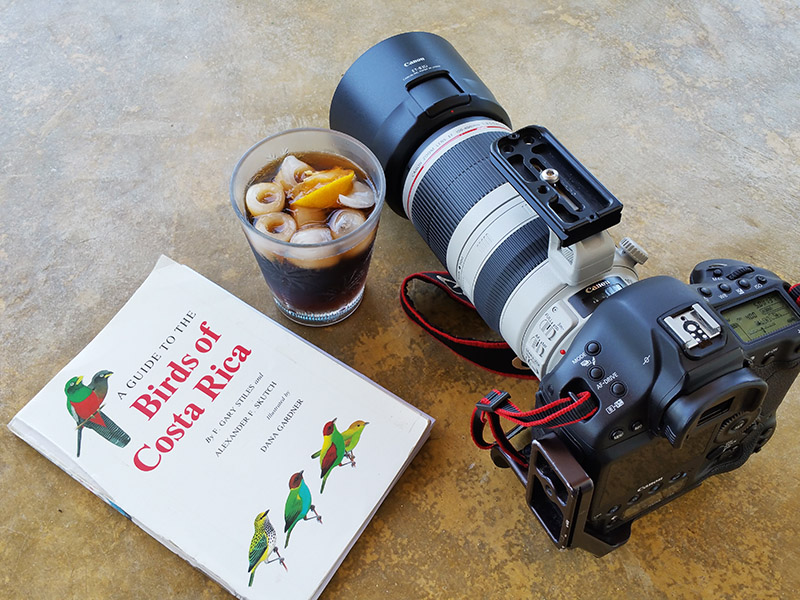
Ethan photographs
with the Canon EOS system.
Special thanks to Singh-Ray filters and the Canon Pro Services program for
ongoing support.
Camera Bodies: EOS 1DS mark III and EOS 5D mark II
Lenses: EF 500mm f/4 IS; EF 70-200 f/2.8 IS; EF 100mm //f2.8 macro; EF 24-70mm f/2.8; EF 24mm TS-E II; EF 17-40mm f/4
Canon Tele-converters v II (1.4x & 2x) and Extension Tubes (12mm & 25mm)
Flashes: 580 EX II; 430EX; Better Beamer flash extender; Gary Fong diffusers and Lumiquest soft boxes
Tripods: Gitzo GT3540LS; Manfrotto 055
Heads: Wimberley WH-2; Really Right Stuff BH-55L; Kirk car window mount; BLUBB beanbag
Memory: SanDisk Extreme cards; various brands of portable hard-drives
Singh-Ray
Filters: LB Warming
Polarizers, LB ColorCombo Polarizer, Gold-n-Blue Polarizer, Vari-N-Duo,
ND grads (both
4x6" size and standard P-sizes), LB polarizer custom for Canon
long-lens drop in unit
It's Not about the Gear!
For many years when I was getting started in nature photography I was hungry for better gear. All I could think about was getting better lenses, the latest pro bodies and every accessory available. Somehow I had gotten the idea that having more gear would make me a better photographer - maybe even a pro. But top notch gear is expensive and I simply couldn't afford it. So to 'get by' I bought used gear that was always a generation or two behind. With that old gear, and a heck of a lot of hard work and determination, I built a collection of tens of thousands of nature images and launched my stock photography business. Many of my best images were made before I had a camera that could autofocus very well.
These days I'm fortunate to make enough money at photography to afford, and justify, some cutting-edge camera equipment. I shoot with high end digital bodies and pro lenses. Building on the knowledge and technique I developed from 16 years of intense shooting, I'm using the new gear to capture photos I never thought were possible before.
But here's the bottom line: gear is only one small part of the equation for success in nature photography. While most photographers are arguing over Canon versus Nikon or who has more megapixels, it's the guy or gal out in the field who spends more time shooting, improving their technique and learning about nature who comes out ahead - always. My approach has been to invest my time and money on photographing, using my existing gear to its fullest potential. The choice between a new 'camera toy' or a photo trip is an easy one for me.
So Why Canon?
I switched to the Canon EOS system almost a decade ago because it was the best match for the kind of photography that I do. Canon is a large company and they invest heavily in research and development, so it's no surprise that they lead the industry in many aspects. As an example, they pioneered Image Stabilized (IS) lenses which are invaluable for wildlife and bird photographers shooting in low light at long focal lengths. Canon's latest generation of digital bodies, like the EOS 1Ds mIII and EOS 5D mark II that am currently using, produce remarkable files. And Canon also has all the little accessories that a nature photographer commonly needs. Overall, I feel that the Canon EOS system offers the fewest limitations and the best potential for growth that parallels my needs as a nature photographer.
To those people out there shooting another brand, who are tempted to email me and tell me how great their system is compared to Canon (it happens all the time): don't bother, I believe you. I think any brand of gear in the hands of a good photographer can be used to make great photos. And besides, at the end of the day, all the debates about gear end at the photos.
This
site © Ethan Meleg, all rights reserved. No form of reproduction,
including copying or saving of digital image
files or text,
or the alteration or manipulation of said image files or text is
permitted. Any unauthorized use of these
images or text will be
prosecuted
to the full extent of federal copyright laws.